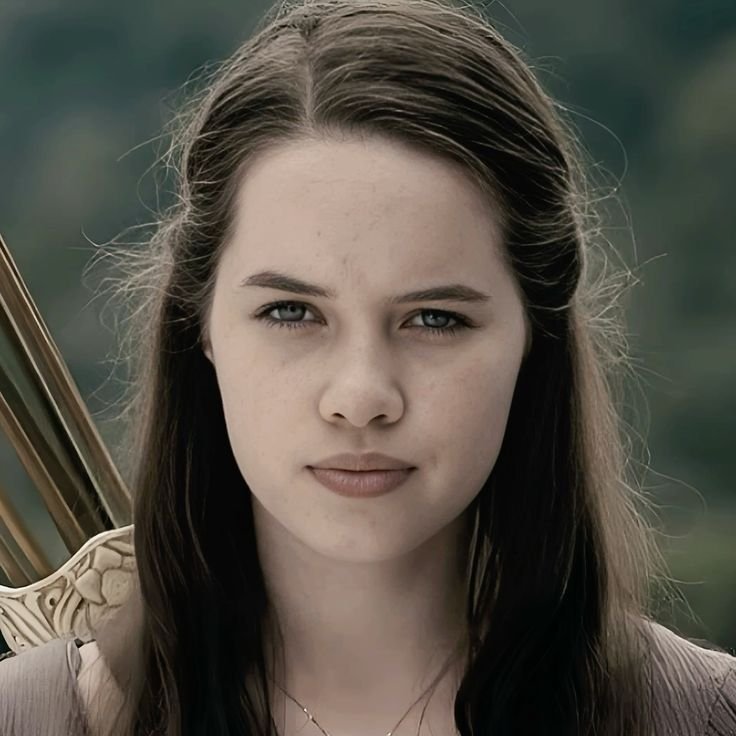
The image of Susan Pevensie, Queen of Narnia, forever changed by the ending of The Last Battle, remains one of C.S. Lewis’s most controversial narrative choices. For many readers, her exclusion from the final journey to the true Narnia feels like a betrayal, a harsh judgment on a beloved character. To understand this contentious fate, we must delve into C.S. Lewis's Intentions for Susan Pevensie, exploring the profound allegorical weight he placed on her transformation and ultimate absence.
At a Glance: Understanding Susan Pevensie's Controversial Fate
- The Exclusion: Susan is the only Pevensie sibling not to enter the "new Narnia" at the end of The Last Battle, having forgotten and dismissed Narnia as a childhood game.
- Lewis's Intent (Likely): Her arc is widely interpreted as an allegory for a loss of religious faith, contrasting her embrace of materialism with Lucy's unwavering belief.
- Critical Backlash: Many critics and readers accuse Lewis of sexism, arguing Susan is punished for natural maturation, interest in her appearance, and developing sexuality.
- Unacknowledged Tragedy: Her entire family dies in a train crash, which Lewis glosses over, while Susan is trying to live a normal adult life in the real world.
- A Nuanced Future: The upcoming Netflix adaptation, directed by Greta Gerwig, presents an opportunity to re-examine Susan's story with greater empathy and modern understanding.
The Heartbreaking End: Unpacking Susan's Absence
Imagine a character who once ruled a magical kingdom, fought alongside a lion god, and inspired countless children, only to be cast aside for seemingly mundane reasons. This is the reality for Susan Pevensie. While her siblings Peter, Edmund, and Lucy, along with Eustace and Jill, gather for the final, fateful train crash that transports them to the new Narnia, Susan is notably absent. Her family, her friends, everyone she knew from both worlds dies and moves on to an eternal paradise, and she’s left behind, oblivious.
In The Last Battle, her fate is revealed through the perspective of the other children: she "is no longer a friend of Narnia." Her disinterest is framed by her focus on "nylons and lipstick and invitations" – the trappings of budding adulthood and social life. She has dismissed Narnia as a quaint childhood game, a phase she's outgrown, unlike her siblings who, despite also being told they had "outgrown" Narnia in earlier books, never lost their belief or love for it. This stark contrast fuels much of the enduring debate about Explore Susan Narnia and her story.
C.S. Lewis's Likely Intent: A Parable of Lost Faith
To truly grasp C.S. Lewis's intentions for Susan Pevensie, we must remember that The Chronicles of Narnia are profoundly allegorical, deeply rooted in Lewis's Christian faith. For Lewis, Narnia was not merely a children's fantasy but a vessel for spiritual truths. From this perspective, Susan's character arc is often understood as a cautionary tale about the perils of losing one's faith and embracing worldly concerns over spiritual ones.
Lewis often contrasted Susan's logical, sometimes skeptical nature with Lucy's unwavering, almost "blind" faith. While Lucy readily accepts the fantastical elements of Narnia, Susan frequently questions, needing proof and rational explanation. As she grows older, this natural inclination, combined with the pressures and distractions of the "real world," seems to evolve into a full-blown rejection of the spiritual and imaginative in favor of the materialistic. Her interest in "nylons and lipstick" isn't merely about fashion; in Lewis's allegorical framework, it represents a deeper spiritual decay, a turning away from the eternal toward the superficial and transient.
The Firestorm of Criticism: Accusations of Sexism and Unfairness
Despite Lewis's likely intent, the critical reception of Susan's ending has been anything but unified. Many readers and scholars vehemently disagree with the justification for her exclusion, often interpreting it as deeply sexist. They argue that Susan is unfairly punished for simply wanting to live a normal, adult life, embracing aspects of femininity that Lewis—or perhaps the prevailing attitudes of his time—viewed with suspicion.
The phrase "nylons and lipstick" has become a flashpoint. Critics suggest it unfairly equates a young woman's natural development and interest in her appearance with a moral failing. For them, it implies that developing sexuality and an interest in social life are inherently "bad" and lead to a loss of spiritual purity, especially for girls. Why is Susan singled out for these "flaws" when her male counterparts, like Peter, are allowed to mature and still maintain their Narnian connection? This disparity often leads to accusations that Lewis’s portrayal of delve deeper into Narnian character analysis reflects a gender bias in his moral judgments.
Furthermore, the emotional impact of Susan's story is often overlooked by Lewis's allegorical framework. The books gloss over the immense tragedy of her entire family dying in a train crash while she is still alive in the real world. Unlike her siblings, who are rewarded for their steadfast belief, Susan is left behind, completely unaware of the cataclysmic event and the new paradisiacal existence of her loved ones. This lack of acknowledgment for her real-world grief and isolation contributes to the feeling that her fate is not only exclusionary but also profoundly cruel.
Faith, Modernity, and the Problem with Proof
Lewis lived in a rapidly changing world, one increasingly secular and fascinated by scientific advancements. His writings often reflect a concern about the erosion of faith in the face of modernity and materialism. Susan, with her "logical nature" and "needing hard proof," can be seen as a proxy for this modern mindset. In the allegorical landscape of Narnia, where faith and wonder are paramount, such a pragmatic approach is ultimately portrayed as a barrier to spiritual truth.
Her journey stands in contrast to the consistent theme in Narnia that belief, even without concrete evidence, is key to accessing its magic and meaning. Characters who doubt or disbelieve—like Eustace initially—are often shown the error of their ways and eventually embrace faith. Susan, however, never fully makes this leap, at least not in a way that allows her to retain her connection to Narnia. Her dismissal of Narnia as a game is not just forgetting; it's an active rejection of an imaginative, spiritual reality for a more conventional, tangible one. This is a central thread in the broader themes in fantasy literature that often explores the conflict between imagination and reality.
The "Outgrowing Narnia" Conundrum: Was Susan Just Different?
One of the complexities in understanding Susan's fate lies in the concept of "outgrowing Narnia." Both Peter and Susan are explicitly told by Aslan in Prince Caspian that they will not return to Narnia because they have "grown too old." Edmund and Lucy receive similar news in Voyage of the Dawn Treader. So, if everyone "outgrows" Narnia, what makes Susan's ending so unique and problematic?
The crucial difference lies in how they outgrow it. Peter and Edmund and Lucy, while no longer destined to visit Narnia physically, retain their belief in it and continue to carry its lessons and spirit within them. They move forward, integrating the magic and wisdom of their Narnian experiences into their adult lives, and are ultimately rewarded by entering Aslan's Country, the "true" Narnia. Susan, on the other hand, forgets Narnia entirely, dismissing it as a childish fantasy. Her "outgrowing" is not a maturation of faith but a complete abandonment of it. This distinction is vital for understanding Lewis’s specific design for her character, particularly in the context of C.S. Lewis's theological underpinnings.
Reclaiming Susan: Netflix and the Path to Nuance
The upcoming Netflix adaptation of The Chronicles of Narnia, with Greta Gerwig at the helm, offers a unique opportunity to revisit Susan's story with a contemporary lens. There's a strong suggestion that Gerwig should "lay the groundwork for Susan's arc early" and handle her fate "with more nuance than Lewis," addressing why she stopped believing without judgment.
This could involve exploring the very real pressures of adolescence, the appeal of social acceptance, and the difficult transition from childhood wonder to adult realities. Rather than portraying her interest in "nylons and lipstick" as a moral failing, a modern adaptation could frame it as a natural part of growing up, showing how societal expectations or a desire for normalcy might push someone away from the fantastical without condemning their choices. It could explore the emptiness or lack of fulfillment that such a life might eventually lead to, rather than simply portraying the choices themselves as inherently wrong. A nuanced approach could do justice to Susan’s character, making her journey a more relatable and empathetic exploration of faith, doubt, and adulthood. This kind of reinterpretation is not uncommon in other controversies in children's literature.
Common Questions About Susan's Fate
Given the ongoing debate, several questions frequently arise about Susan Pevensie’s ending. Here are crisp, direct answers:
- Did Susan ever return to Narnia?
No, in Lewis's canonical Chronicles, Susan Pevensie never returns to Narnia, nor does she join her family in the true Narnia (Aslan's Country) after the train crash in The Last Battle. She is left behind in the "shadowlands" (our world). - Was C.S. Lewis sexist in his portrayal of Susan?
This is highly debated. While some argue Lewis was merely applying his allegorical framework about lost faith consistently, others contend that his specific critiques of Susan's "nylons and lipstick" betray a sexist bias, punishing her for normal female maturation and interests in a way male characters were not. - Why didn't Susan die with her family in the train crash?
Lewis states that Susan was not on the train that crashed. She had stopped believing in Narnia and was preoccupied with social and materialistic concerns, thus she was not among the "friends of Narnia" who gathered and died together. - Could Susan have been "saved" or redeemed?
Lewis himself offered conflicting, somewhat hopeful remarks about Susan later in life, suggesting she might have a chance to return to Narnia and faith "in her own way." However, within the confines of the published books, her fate remains unresolved and tragic. - Is Susan's story unique among the Pevensies?
Yes. While all the Pevensie children eventually "outgrow" their physical visits to Narnia, Susan is unique in that she completely forgets and dismisses Narnia, losing her belief entirely. The others retain their faith and connection.
Beyond the Controversy: Understanding Lewis's Allegorical Intent
Ultimately, C.S. Lewis’s intentions for Susan Pevensie were rooted in his deep conviction that life's true meaning lay beyond the material world, in spiritual and eternal truths. For Lewis, Susan's story was a powerful, if stark, allegory for what he perceived as a common human failing: choosing the superficial over the profound, the temporary over the eternal. She represents those who, as they grow older, allow the distractions and perceived sophistication of the adult world to eclipse the childlike wonder and faith that Narnia embodies.
It’s crucial to acknowledge that authorial intent does not negate reader experience or valid criticism. Whether Lewis succeeded in portraying this allegory without inadvertently reinforcing harmful stereotypes or creating an unnecessarily cruel fate is a separate, vital discussion. Her story remains a testament to the complexities of spiritual journeys, the challenges of holding onto belief in a secular world, and the enduring power of literature to spark passionate debate.
Reframing Susan's Story for a New Generation
Susan Pevensie's journey forces us to confront uncomfortable questions about faith, doubt, and the choices we make as we transition from childhood to adulthood. For C.S. Lewis, her path was a warning; for many readers today, it's a source of profound injustice. As new adaptations emerge, the opportunity to re-examine Susan's story with empathy and nuance is not just about correcting perceived wrongs, but about exploring the universal struggles of growing up, finding identity, and defining what "faith" truly means in a complex world. Her story, more than any other in Narnia, encourages us to reflect on our own beliefs and priorities, making her an enduring, if tragic, figure in the tapestry of children's literature.