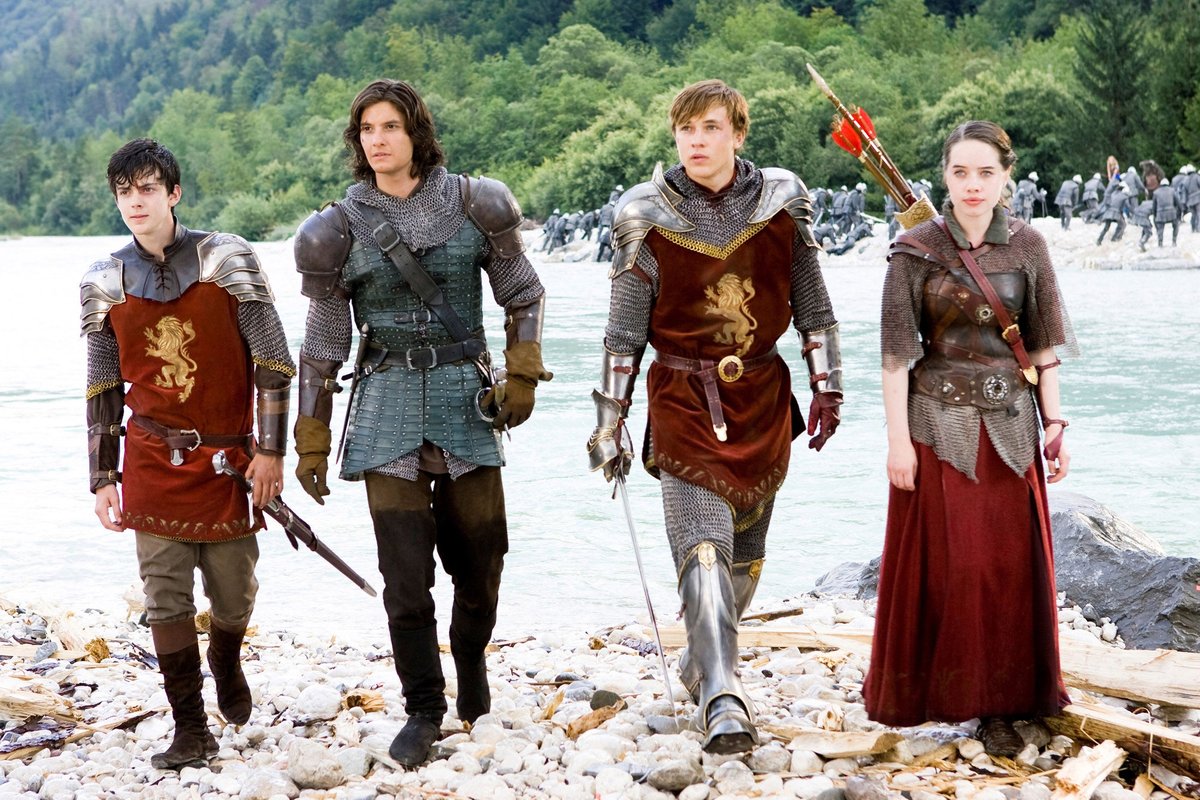
Susan Pevensie. The name alone often sparks passionate debate among fans of C.S. Lewis's beloved The Chronicles of Narnia. While her siblings, Peter, Edmund, and Lucy, journeyed into the magical land multiple times and ultimately returned there for eternity, Susan was notably, and tragically, left behind. Her exclusion from the final, joyous return to Narnia is not just a plot point; it's a profound narrative choice that has ignited discussions about faith, maturity, and gender roles for decades, challenging readers to consider what it truly means to "grow up."
This enduring controversy ensures that Susan's story remains deeply relevant, especially as new adaptations, like Greta Gerwig's upcoming Netflix reboot, will undoubtedly need to grapple with her complex and often heartbreaking arc. It's a defining feature of the Narnia saga that demands a closer look, peeling back layers of literary intent, character development, and reader interpretation.
The Heart of the Exclusion: A Sister Left Behind
The core of the "Problem of Susan" lies in The Last Battle, the final book in the series. While her siblings, alongside Eustace Scrubb, Jill Pole, and Professor Digory Kirke and Polly Plummer, experience a profound train crash that transports them to the true Narnia, Susan is conspicuously absent. The other characters explain her fate: she has forgotten Narnia, dismissing it as "childhood games," and become preoccupied with the materialistic concerns of adulthood—"nylons, lipstick, and invitations." C.S. Lewis himself is widely believed to have intended this as a representation of a loss of faith, a character turning away from the spiritual for the superficial.
This narrative choice creates a stark contrast with her siblings, who are portrayed as maintaining their "purity and innocence," their belief in Narnia and its inherent childhood values. They are rewarded by returning to Narnia, having held onto its lessons and never fully abandoning their inner child in the real world. To truly understand the nuances of this journey and its implications, it's essential to analyze her growth (or lack thereof, from a Narnian perspective). Dive deeper into how her path diverges and why she ended up on a different trajectory by exploring Susan Pevensies Character Arc Analysis.
Understanding Susan: The Logical Queen and Reluctant Hero
From her very first appearance, Susan Pevensie stood apart. As the oldest girl, evacuated from war-torn London to Professor Digory Kirke’s mansion, she often tried to fill her absent mother's shoes. Her personality is defined by practicality, caution, and a keen sense of logic, often making her reluctant to accept things that defy rational explanation. Where Lucy embraced Narnia with open belief, Susan frequently doubted its existence, needing hard proof and seeking practical solutions to problems. She prioritized well-being over heroics, making her a grounded, if sometimes hesitant, presence among her adventurous siblings.
In Prince Caspian, Aslan himself tells both Peter and Susan that they have "outgrown" Narnia, implying a natural progression away from childhood fantasy. While Edmund and Lucy receive similar news in Voyage of the Dawn Treader, their endings are vastly different. Susan's story presents a fascinating study of responsibility and skepticism within a world demanding faith. To appreciate her unique position and contributions to the early Narnian adventures, you��ll want to Uncover Susans Narnia role.
The Enduring Debate: Was Susan Punished?
The controversy surrounding Susan's fate, often referred to as "The Problem of Susan," extends far beyond a simple disagreement over a character's ending. Critics argue vehemently that her exclusion punishes her not just for losing faith, but for the very act of pursuing a normal adult life and for developing any form of nascent sexuality or interest in conventional feminine pursuits. The narrative's dismissal of her focus on "nylons, lipstick, and invitations" feels dismissive, especially given that Aslan himself tells her she's "outgrown" Narnia and needs to live in the real world.
Furthermore, the tragedy of her entire family dying in a train crash while she, striving to live the adult life Aslan instructed, is left alone in the world, is often glossed over. Her complex character flaws—her need for hard proof, her practical solutions—were never fully overcome, leading to a perceived black-and-white dichotomy of redemption where belief is rewarded and adulthood, particularly female adulthood, is implicitly condemned. To fully grasp the depth of this literary contention and its many layers, we invite you to Unpack the Problem of Susan.
Symbolism, Allegory, and Gendered Readings
Lewis's Narnia is rich with symbolism and allegory, and Susan's story is no exception. Her journey, or lack thereof, is often interpreted as an allegory for losing religious faith in favor of secular, materialistic concerns. The idea that she "outgrew" Narnia can be seen as a metaphor for abandoning childlike wonder and spiritual belief for the perceived realities of the adult world. However, this interpretation has sparked considerable pushback, especially concerning its implications for women.
Many scholars and readers question whether Susan's "loss of faith" is presented fairly or if it carries a gendered bias. Her desire for practicality and a normal life, contrasted with her siblings' idealized "purity," opens avenues for discussions about the expectations placed upon female characters in allegorical narratives. Exploring these deeper layers of meaning is crucial for a complete understanding of her impact. Discover the profound messages and complex interpretations embedded in her story by allowing us to Unlock Susans narrative meaning.
A Feminist Lens: Susan and the Burden of Womanhood
Perhaps no other aspect of Susan's exclusion has generated as much critical discussion as its feminist implications. Critics argue that her character is effectively punished for embracing aspects of conventional femininity—growing up, becoming interested in boys, clothes, and social life—which are then framed as shallow and detrimental to her spiritual well-being. This perspective posits that the narrative subtly condemns her for developing a normal, adult female identity and desires, while her male counterparts are rewarded for retaining a certain "childlike" purity.
This reading challenges the idea that Susan simply "lost faith," suggesting instead that she was unfairly singled out for embracing a path many women naturally take, only to be cast out for it. It raises fundamental questions about how female agency, maturity, and sexuality are portrayed within the Narnian universe. To engage with these vital discussions and understand the power dynamics at play, we encourage you to explore Feminist Readings of Susan Pevensie.
Looking Ahead: Susan's Future in a New Narnia
Susan Pevensie's story is far from over. Her controversial exclusion continues to resonate with readers, sparking empathy, frustration, and endless debate. As new adaptations emerge, particularly Greta Gerwig's highly anticipated Netflix reboot, there's a powerful opportunity—and perhaps a responsibility—to re-examine Susan's fate. Will her story be re-imagined? Will her motivations be given more depth, or her exclusion contextualized in a way that addresses long-standing criticisms? The continued discussion around Susan ensures that her legacy, whether as a tragic figure or a misunderstood hero, remains a vibrant and essential part of the Narnia experience for generations to come.