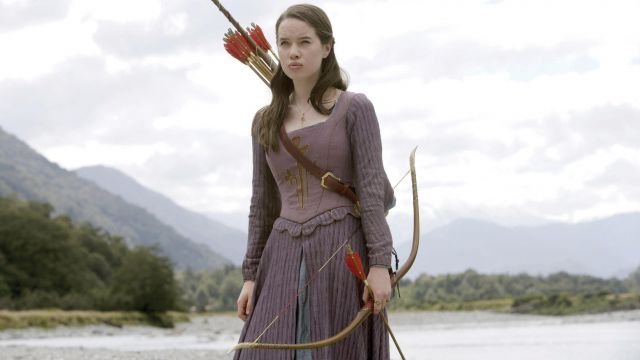
It's a bittersweet truth about stories: not every character gets to live happily ever after in the way we expect. For many of us, the Pevensie children of Narnia represent childhood wonder, courage, and the triumph of good. Yet, delving into Susan Pevensie's Character Arc Analysis reveals a poignant, almost heartbreaking journey that details her eventual, and some would say definitive, departure from the magical world she once ruled as queen. Her story isn't just about growing up; it's a profound exploration of skepticism, the allure of the mundane, and the painful process of losing sight of what once filled your soul with magic.
Let's explore why Susan's path resonates so deeply, even for those who wish it had ended differently.
At a Glance: Susan Pevensie's Journey
- Initial Persona: Practical, logical, and gentle, often the voice of reason among her siblings.
- Narnian Reign: Crowned Queen Susan the Gentle, known for her wisdom and skill with a bow.
- Seeds of Doubt: Begins to prioritize her "real world" life over Narnian memories upon returning to England.
- The Turning Point: Struggles to believe in Narnia's return during Prince Caspian, highlighting her growing skepticism.
- The Final Departure: By The Last Battle, she completely disavows Narnia, viewing it as a childish fantasy.
- Core Theme: Represents the loss of wonder and belief that can accompany adulthood, contrasting sharply with her siblings' enduring faith.
- Why It Matters: Her arc provokes questions about what we choose to believe in and the cost of abandoning our imagination.
The Unlikely Queen: Susan's Early Days in Narnia
When the four Pevensie children tumbled through the wardrobe into Narnia, each responded differently. Lucy, the youngest, embraced the magic with open arms. Edmund, initially drawn to darkness, found his path to redemption. Peter, the eldest, stepped up as a leader. And then there was Susan.
From the outset, Susan Pevensie was painted as the practical, cautious sibling. While Lucy was making friends with fauns, Susan was the one asking logical questions, worried about getting home, and ensuring everyone had their coats. She was the anchor, the voice of reason that kept her younger siblings grounded, even as the extraordinary unfolded around them. She initially found Mr. Tumnus's tale of the White Witch terrifyingly real, a stark contrast to Lucy's immediate acceptance.
As events spiraled, Susan was gifted a magical bow and arrows and a horn that would summon aid in times of peril. These weren't just tools; they were symbols of her growing role. She became Queen Susan the Gentle, known for her steady hand, her diplomatic nature, and her remarkable skill as an archer. She didn't lead charges like Peter or possess Lucy's healing touch, but her presence was a comforting, stable force. Her initial arc was one of embracing the fantastical, overcoming her practicality to become an integral part of Narnia's golden age. This period solidified her place alongside her siblings, sharing the shared Narnian experience of the Pevensie children and its wonders.
Yet, even in her golden years as Queen, there were subtle hints of the rational mind that would eventually pull her away. She was practical, always thinking of consequences, perhaps a little too aware of the "how" rather than simply accepting the "what."
The Pull of the Mundane: Returning to England
The first departure from Narnia after the children's long reign as Kings and Queens was a jarring one. They returned to England as children, as if no time had passed. For Peter, Edmund, and Lucy, Narnia remained a vivid, cherished memory, a sacred space in their hearts. For Susan, however, the return to ordinary life seemed to exert a stronger pull.
After their first return, the children yearned for Narnia. They talked about it, dreamed about it. But as they got older, especially Susan, the mundane world started to assert its dominance. The realities of school, friends, and social expectations began to overshadow the extraordinary memories. This wasn't a malicious turning away; it was a slow, almost imperceptible drift. The practical Susan started to find practical explanations for the magical. It was a coping mechanism, perhaps, to reconcile the unbelievable with the everyday.
The Struggle for Belief: "Do You Mean to Say You Don't Believe It's Happening?"
Susan's true struggle with belief comes into sharp focus during Prince Caspian. When the children are pulled back into Narnia, hundreds of Narnian years later, they find a land that has fallen into disrepair, its magic dimmed, its talking animals driven into hiding. It's a Narnia that barely resembles the vibrant kingdom they once ruled.
While Lucy quickly re-establishes her connection with the land and its creatures, and Peter and Edmund prepare for battle, Susan is noticeably hesitant. She struggles with the very idea that they are back, and even more so with the concept of Narnia's diminished state. When Aslan reveals himself to Lucy, but not immediately to the others, Susan is the most skeptical. "Do you mean to say you don't believe it's happening?" Lucy asks her, a question that cuts to the heart of Susan's burgeoning disconnect.
Susan's logical mind demands proof. She looks for rational explanations, for visual confirmation. She questions Lucy's visions and her unwavering faith. She's not being stubborn out of spite; she's genuinely grappling with what her adult mind perceives as implausibility. This internal conflict is a critical part of the complexities of growing up, where the innocence of childhood belief often collides with the demands of adult reason.
This period highlights a critical aspect of Susan's character: her strong sense of what is "real" and what is "sensible." In a world increasingly defined by tangible evidence, the unseen magic of Narnia becomes harder for her to accept. She's becoming more concerned with fitting into her own world, with the social expectations of a young woman her age, than clinging to tales of talking animals and mythical creatures.
The Irreversible Drift: Embracing "Adult" Life
The final, heartbreaking chapter of Susan's arc unfolds in The Last Battle. By this point, her siblings—Peter, Edmund, and Lucy—along with their cousin Eustace and Jill Pole, are still deeply connected to Narnia. They attend meetings about it, they speak of it with reverence. Susan, however, is conspicuously absent from these gatherings.
When Peter and Edmund speak of her, it's with a mix of sadness and resignation. "Susan is no longer a friend of Narnia," Peter says. "She's interested in nothing nowadays except nylons and lipstick and invitations. She always was a jolly good shot with a bow and arrows, but she's far too keen on being grown-up to bother about Narnia."
This isn't a sudden betrayal. It's the culmination of years of quiet drifting, a conscious decision to shed the "childish" past and embrace a new identity. For Susan, Narnia has become a forgotten dream, a phase she outgrew. She sees her siblings' continued belief as quaint, perhaps even embarrassing. She wants to be seen as sophisticated, mature, and fashionable. The magic and wonder of Narnia, once her reality, have been reclassified as childish fantasy. It's a profoundly sad depiction of the painful experience of losing belief.
Her focus shifts entirely to the material world, to social status and superficial concerns. She believes she is moving forward, leaving behind the childish things. Tragically, in doing so, she misses the ultimate journey to the "real" Narnia, the one that awaits her siblings after their earthly lives. Her pragmatic nature, once a strength, becomes a barrier to the deepest truth.
Why Susan's Arc Matters: The Pain of Losing Wonder
Susan Pevensie's character arc is often the most debated and emotionally charged among Narnia fans. Why would C.S. Lewis, a devout Christian who championed imaginative faith, write such a fate for one of his beloved queens?
Her story serves as a powerful allegory for the loss of childhood wonder and the potential pitfalls of a purely materialistic, rationalistic worldview. Susan represents those who, in the process of "growing up," leave behind their capacity for belief, their openness to the miraculous, and their connection to deeper spiritual truths. She chooses the superficial over the profound, the tangible over the spiritual.
Lewis, through Aslan, often stresses the importance of keeping one's heart open, of cultivating faith and imagination. Susan's arc is a cautionary tale: a reminder that dismissing what you once cherished as "childish" can mean closing yourself off from greater realities. Her pragmatic nature, initially a virtue, ultimately becomes a hindrance, preventing her from seeing beyond the immediate and the mundane. For a comprehensive look at her place in the larger narrative, see All about Susan Narnia.
Counterarguments and Nuances: Was Susan Truly Lost?
It's important to acknowledge that Susan's fate is a point of contention, even among avid Narnia scholars. Some argue that Lewis's portrayal is overly harsh, suggesting that her interest in "nylons and lipstick" hardly merits eternal separation from Narnia. Others point out that her rejection wasn't just about fashion; it was about a fundamental disavowal of truth.
- The "Growing Up" Argument: Some believe Susan's story simply reflects a natural process. Not everyone retains the same imaginative capacity into adulthood. Perhaps she genuinely outgrew Narnia, and Lewis was simply being realistic. However, Lewis's other protagonists, like Lucy, mature without losing their faith, suggesting Susan's path was a choice, not an inevitability.
- The Feminist Critique: Some modern interpretations view Susan's arc as problematic, especially when juxtaposed with the boys' arcs. Peter and Edmund become kings and warriors, retaining their connection to Narnia, while Susan, as she begins to embrace traditionally feminine interests (makeup, boys), is depicted as falling away. Is Lewis subtly critiquing female adolescence or simply illustrating a universal temptation?
- The Door is Always Open (Maybe): Lewis himself offered a small glimmer of hope, suggesting that Susan might return to Narnia one day, implying her separation wasn't necessarily permanent or punitive. However, within the confines of the published books, her arc is definitive, ending with her outside the scope of Narnia's ultimate renewal.
Ultimately, Lewis's intent seems to be less about condemning Susan for her choices and more about illustrating a universal human tendency: the struggle to maintain belief in something intangible when the tangible world offers so many distractions and demands.
The Power of Memory vs. Present Reality
One could argue that Susan simply moved on. In the real world, childhood stories eventually give way to adult concerns. But Narnia wasn't just a story for the Pevensies; it was a deeply personal, lived reality. The core conflict in Susan's arc revolves around how she reconciles (or fails to reconcile) that profound past with her present life.
Her siblings maintained a vibrant connection to Narnia through memory, discussion, and an inner sense of its reality, even when they weren't physically there. They understood that the physical absence didn't negate its existence or its impact on their souls. Susan, by contrast, chose to actively suppress these memories, re-labeling them as "childish games." This act of intellectual dismissal, rather than just forgetting, is what truly defines her departure. It's a profound statement on how we choose to interpret our own past and the power we give to different truths.
Contrast this with Lucy's unwavering faith, who never stopped believing, or Edmund's path to redemption, which allowed him to embrace the magic anew after his initial betrayal. Susan's journey showcases that losing faith isn't always about malice; sometimes, it's a slow erosion driven by practicality and a desire to conform.
Lessons from Susan's Journey: Holding Onto Wonder
So, what can we take away from Susan Pevensie's poignant character arc?
- Guard Your Sense of Wonder: Susan's story is a powerful reminder that adulthood doesn't have to mean abandoning imagination, curiosity, or belief in things unseen. It’s a challenge to keep the magic and wonder of Narnia alive in our own lives, whatever form it takes.
- The Danger of Dismissal: Be cautious of dismissing past experiences or profound truths simply because they don't fit neatly into a purely rational framework. What seems "childish" today might be fundamental to your spiritual or emotional well-being.
- Prioritize What Truly Matters: Susan prioritized fleeting social acceptance and superficial appearances over her deep connection to Narnia and her family's shared history. It's a lesson in examining what truly holds value in our lives.
- Faith and Reason Aren't Always Opposed: While Susan leaned heavily on reason, her siblings demonstrated that reason doesn't have to extinguish faith. A balanced approach allows for both logical thought and an openness to mystery and wonder. Aslan, the embodiment of wisdom and good, often encouraged the children to use their minds, but also to trust their hearts and instincts, demonstrating Aslan's profound guidance.
- Our Choices Have Consequences: Susan's arc emphasizes that our choices, particularly those regarding our beliefs and priorities, shape our ultimate destination and who we become. Her Narnian departure, while painful to witness, underscores the importance of choosing wisely.
Susan Pevensie's journey is not an easy one to grapple with, but it is undeniably one of the most compelling and thought-provoking aspects of The Chronicles of Narnia. It forces us to look inward and ask ourselves: are we letting our own "nylons and lipstick" distract us from the deeper magic that might be just beyond the wardrobe door? Her story ensures Narnia's enduring relevance as more than just a children's fantasy, but a profound exploration of the human spirit.